The English version of our website is an automatic translation and can contain erros.

Classification of firewood species

Firewood is divided into three categories, depending on its calorific value, i.e. the heat it produces. The best firewood is hardwood, such as oak, hornbeam, ash and beech. Hardwood burns longer than softwood.

SpeciesCalorific value
Hardwoods (G1) oak, hornbeam, ash, beech, maple, acacia27-30
Semi-hardwood (G2) : birch, chestnut, cherry23-28
Softwood (G3) Alder, poplar, lime, aspen and softwoods16-23

And for cooking? Pizzerias, bakeries and other professional cooks and smokers often prefer softwood, because it gives off a more vivid heat, even though it burns for a shorter time.

Video summary

Information on species

Below is a list of the best-known species, with their descriptions.

Hardwoods (G1)

Hardwoods are the best firewoods. They all have a similar calorific value, between 27-30. Hornbeam may have the highest calorific value, but there is little difference.

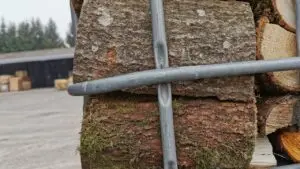
Oak log
Oak is a hard hardwood (category G1). It is therefore an excellent firewood. However, it is known to dry more slowly.
Mature ash bark
Ash is a hard hardwood (category G1). It is therefore an excellent firewood. Ash has the advantage of drying quickly.
Bark hornbeam log
Hornbeam is a hard hardwood (category G1). Hornbeam is probably the best firewood. It has a slightly higher calorific value than other hardwoods.
It has smooth bark.
Beech logs
Beech is a hard hardwood (category G1). It is therefore an excellent firewood. Beech resembles hornbeam. It has smooth bark.
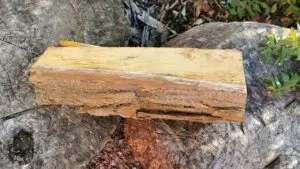
Acacia log
Acacia is a hard hardwood (G1). It is therefore an excellent firewood.
Acacia is a magnificent wood, easily recognisable by its yellow colour and white line on the sapwood. Unfortunately, it is rare, but there are still some left in our Ardennes forests. You'll be lucky if you find some in our products!
Smooth bark maple log
Maple is a hardwood (G1). This makes it an excellent firewood. However, some species of maple are softer, depending on where they grow. In our Ardennes forests, maple is fairly dense.

Semi-hardwoods (G2)

G2 is an intermediate category, open to interpretation. For example, it is often used to classify birch, cherry and other species that are not as dense as hardwoods, but are not necessarily soft either.

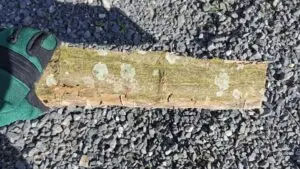
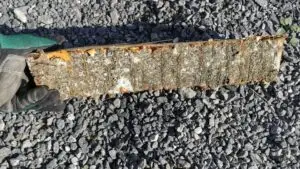
Birch log bark with cracks in patches
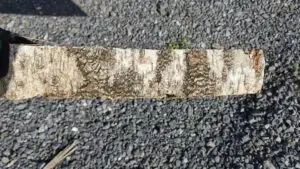
Birch is a medium-hard hardwood (category G2). It is therefore an intermediate quality firewood. It is popular with pizzerias, for example.
Birch log bark
Cherry, like most fruit trees, is a medium-hard hardwood (G2 category). It is therefore an intermediate quality firewood. It is appreciated for its smell and colour.

Softwoods and conifers (G3)

The G3 category includes soft hardwoods and softwoods. These are woods that burn quickly and therefore have a lower calorific value.

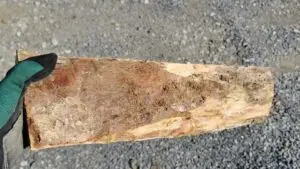
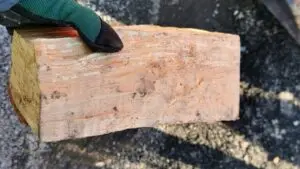
Inside the alder
Alder is a soft hardwood (G3). It is therefore a firewood with low calorific value, which burns quickly, but which can be appreciated for certain uses such as cooking.
Alder is distinguished by its pinkish colour and thick bark.
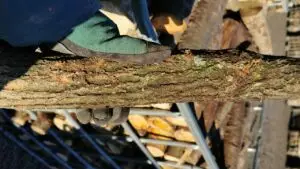
Willow charcoal
Willow is a soft hardwood (G3). It is therefore a firewood with low calorific value, which burns quickly, but which can be appreciated for certain uses such as cooking.
Beware of confusion: the bark of the willow slightly resembles that of the oak.
Aspen poplar logs

Poplars and aspens are soft hardwoods (G3). They are therefore firewoods with low calorific value, which burn quickly, but which can be appreciated for certain uses such as cooking.

Charbonnette fir log

Softwoods also belong to category G3, like softwoods. They burn quickly.

Softwoods can be identified by their bark. They also contain resin (hence their name). Be careful, they tend to clog up certain appliances. To burn resinous wood, you need an efficient appliance with a lively combustion, and of course it must be dry.